
Storm Warning: Who Is Liable for Storm Deaths on Golf Courses?
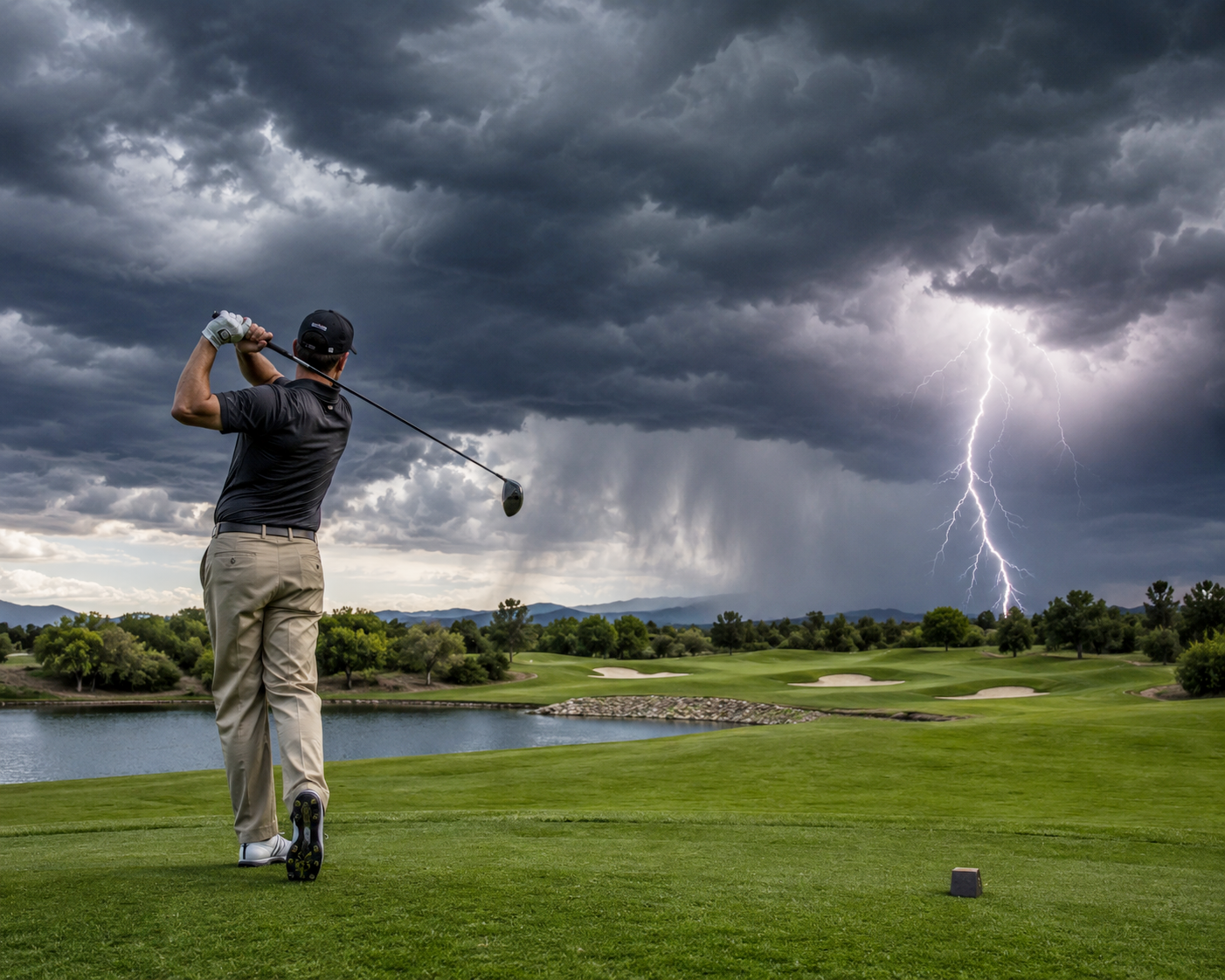
⛈️ The “Act of God” Defence
Historically, lightning strikes and severe weather events have often been categorised legally as an “Act of God” — meaning a natural occurrence so extraordinary and unforeseeable that liability cannot reasonably attach to another party.
Golf operators frequently rely on this defence.
One of the leading cases is Hames v State of Tennessee (1991), where a golfer was killed by lightning on a state-owned golf course in the United States. His widow argued the course was negligent because it lacked lightning shelters, warning systems and evacuation procedures.
Initially, an appellate court sided with the widow and awarded damages. However, the Tennessee Supreme Court overturned that decision. The Court ultimately found the lightning strike itself — not the absence of shelters or warnings — was the “proximate cause” of death. The Court also emphasised that lightning dangers are matters of common knowledge.
That ruling reinforced a traditional legal principle:
Natural weather events alone do not automatically create liability but modern courts are increasingly asking a different question, not whether the storm caused the death but whether the operator failed to respond reasonably to a foreseeable danger...
☂️ The Modern Standard: Foreseeability and Risk Management
Today, golf courses are expected to actively monitor weather conditions and implement reasonable safety procedures. Technology has changed expectations dramatically.
Lightning detection systems, weather radar, sirens, automated cart GPS warnings, suspension protocols and evacuation procedures are now commonplace across many courses worldwide. As these systems become industry standard, the legal threshold for “reasonable care” rises alongside them.
That issue is currently being tested in a wrongful death lawsuit arising from the death of 29-year-old golfer Raymond Baxter Jr at Bentwater Golf Club in Georgia.
Golf facilities are no longer judged solely on whether storms are natural events — they are judged on whether they responded reasonably once the risk became foreseeable.

🕵🏼♂️ Assumption of Risk vs Duty of Care
Golf operators also argue that players voluntarily assume the inherent risks of outdoor sport.
Most people understand lightning is dangerous. If thunder is audible and golfers continue playing regardless, courts may find contributory negligence or assumption of risk.
However, assumption of risk is not unlimited and courts often distinguish between obvious natural dangers, and operational failures by a venue. For example:
Did the course have a storm protocol? Were staff monitoring radar? Were warnings issued promptly? Were golfers allowed to continue play after danger became apparent? Did the course provide safe shelter? Were evacuation procedures followed consistently?
The stronger the operational systems, the stronger the defence.The weaker the systems, the more exposure a facility may face.
🌪️ Real Cases Beyond Lightning
Storm liability on golf courses is not confined to lightning strikes.
In Australia, the Northern Territory Coroner investigated the death of William Brown, who died after a tree branch fell on him during a round at Darwin’s Gardens Park Golf Links.
The Coroner found the death was “preventable” and criticised inadequate inspection and maintenance of trees on the course. Recommendations followed for broader tree safety inspections on council land.
This distinction is important legally.
Unlike lightning — which is inherently difficult to control — falling trees or branches may involve:
maintenance failures, inspection deficiencies, ignored warning signs, or poor risk management.
Once human negligence contributes to the chain of events, the “Act of God” defence weakens significantly.

🔮 The Problem With Foreseeability
The central legal battleground in nearly every weather-related golf course death is foreseeability.
Storms are natural. But foreseeable storms create obligations.
Courts generally ask:
Was severe weather reasonably predictable? Did the operator have enough time to react? Did they act consistently with industry practice? Could reasonable steps have reduced the risk?
The faster and more sudden the weather event, the harder liability becomes to establish.
For instance, recent lightning fatalities in New Jersey and Queensland involved rapidly developing storm systems where questions arose over how much warning time existed and whether golfers themselves appreciated the danger.
This is why many claims ultimately settle around operational conduct rather than the storm itself.
🧾 Industry Expectations Are Changing
Perhaps the biggest shift is that golf course safety expectations continue to rise.
What may have been considered reasonable in 1991 may no longer satisfy courts today.
Modern facilities increasingly implement:
live weather monitoring, automated suspension systems, GPS cart alerts, mandatory evacuation procedures, lightning shelters, staff emergency training, and documented storm response protocols.
As these measures become widespread, operators who fail to adopt them may struggle to argue they met contemporary standards of care.
In other words:
The legal definition of “reasonable precautions” evolves with the industry itself.
⚖ So Who Is Culpable?
The uncomfortable legal reality is that culpability in storm-related golf deaths often falls into a grey area.
Sometimes the weather is truly unavoidable.
Sometimes the golfer ignores obvious danger.
Sometimes the venue fails to act.
And increasingly, courts are being asked to determine where personal responsibility ends and organisational responsibility begins.
The law does not require golf courses to eliminate all risk. That would be impossible.
But it does require them to respond reasonably to foreseeable danger.
As weather volatility increases and safety technology becomes more sophisticated, the legal scrutiny surrounding golf course storm deaths is only likely to intensify.